You built your WordPress site yourself because it made sense at the time. It was faster, cheaper, and good enough to get you online.
But as the business grows, the site starts falling behind. Updates get delayed, small issues pile up, and changes take longer than they should because you are busy running the business.
You know, a professional web designer could fix most of this. The real question is whether it is actually worth paying for, or if you can keep pushing a DIY setup a bit further.
In this blog, we’re covering the clear signs your DIY website is holding you back and costing you customers. When you’re finished reading, you’ll know when investing in a professional WordPress site is the better move. Let’s dig in.
You’re Not Getting Enquiries Through Your Website

When your website isn’t generating enquiries, it’s usually because visitors can’t figure out how to contact you or what you actually do for them. Think about it. When was the last time someone actually filled out your contact form? If you can’t remember, that’s usually a sign that something is getting in the way.
Often, the form is buried in the footer, hidden behind a vague “Get in Touch” button, or broken entirely after a plugin update conflicts with your WordPress theme. Visitors land on your site, look for a clear next step, and if they can’t find one, they’ll leave.
Messaging plays a role here, too. If your site doesn’t clearly spell out who you help and what problem you solve, people won’t take action. They’ll bounce before you even get the chance to explain.
And here’s the kicker: Poor conversion rates aren’t always obvious until you check your analytics and realise your site gets traffic but zero enquiries.
Your Site Looks Dated or Patchy
Ever land on a website and immediately think “this business hasn’t updated since 2018“? Your visitors are thinking the same thing about yours.
Mismatched fonts, clashing colours, and layouts that feel thrown together send that message. Outdated stock photos do the same by making your business look neglected or out of touch.
And visitors don’t take long to notice. A Behaviour & Information Technology study shows people form judgements about a website in just 0.05 seconds.
It doesn’t stop there. Visitors also leave when the design feels dated or patchy. And once they’ve had a poor experience, 88% are less likely to return. That’s a lost customer and often lost referrals down the track.
A website isn’t just about visuals. It’s your first impression and your credibility in one place. So when it looks neglected, visitors start questioning the quality of what sits behind it.
Mobile Performance: Where DIY Sites Fall Apart
Did you know that mobile devices account for 62.54% of global website traffic? That means most of your visitors are viewing your WordPress site on their phones. And if it doesn’t work properly there, you’re losing more than half your potential customers. Mobile issues typically show up in two areas.
Slow Loading Times Hurt Conversions

According to Google, 53% of visitors abandon sites that take longer than three seconds to load on mobile. That’s more than half your traffic gone before they even see what you offer.
Your site could be slow for various reasons. But heavy images and unoptimised code are usually the culprits that cause your WordPress site to crawl on mobile devices. You can use tools like TinyPNG to compress images without losing quality. As for the code, a web developer can clean up bloated scripts and remove unnecessary plugins that slow things down.
Broken Links and Clunky Navigation
It’s easy for users to leave when it’s harder to navigate your site on mobile than it should be.
For example, if menus don’t collapse properly on smaller screens, users will need to scroll endlessly or tap tiny buttons that barely respond.
Similarly, internal links can break when viewed on mobile, which creates dead ends that frustrate potential customers (and yes, it’s as frustrating as it sounds). Beyond that, text can overlap images or disappear off-screen entirely, causing your web page to become impossible to read.
Google Can’t Find You (And Neither Can Customers)
You could have the most beautiful website in your industry, but if Google can’t find it, neither can your next customer.
The problem usually starts with technical basics. For instance, missing meta descriptions and title tags mean search engines don’t understand what your pages are about. Plus, no keyword strategy leaves your WordPress site invisible for the searches customers are actually making.
That invisibility has a direct cost, too. Organic traffic is free, but when your site doesn’t rank, you’re either paying for Google Ads to get visitors or getting no traffic at all. Most businesses can’t sustain that long-term.
SEO isn’t something you set up once and forget about, either. It requires regular content updates, proper keyword placement, and technical optimisation. Without these foundations in place, your site stays buried on page three, where nobody’s looking.
Your Content Management System Became a Nightmare
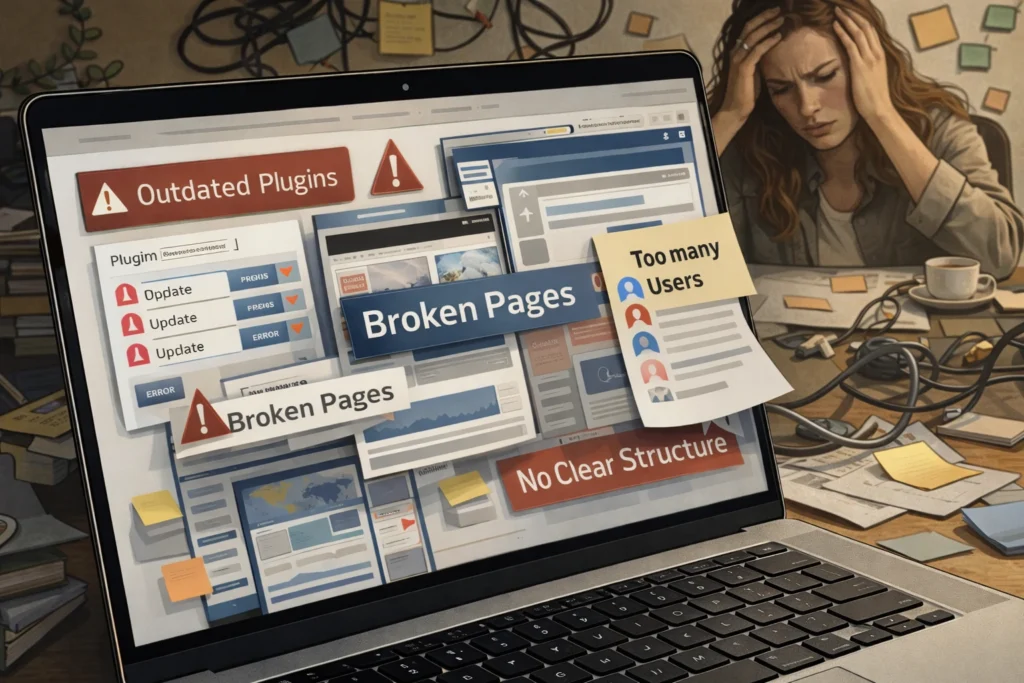
Remember when you thought managing your own WordPress site would save time and money? Instead, even basic updates start taking far longer than they should.
For instance, drag-and-drop editors often fight you on layout and formatting. You move one element, three others shift out of place, and the builder that once felt easy becomes a constant source of frustration.
Then there are the plugin conflicts. The contact form plugin stops working after you update your theme. Or your booking system breaks entirely because two plugins don’t play nice together. These conflicts happen constantly, and troubleshooting eats up hours you don’t have.
Eventually, you avoid making changes altogether because fixing one thing breaks something else. Your WordPress site has become more trouble than it’s worth, even if the hosting itself works fine.
When to Start Building with a Web Designer
The answer depends on your priorities. If you want to focus on running your business instead of wrestling with WordPress, it’s probably time. But from what we’ve seen helping small businesses, the tipping point usually comes when:
- Your Business Needs Custom Features: You need custom features your competitors don’t offer, and the drag-and-drop editor can’t deliver them. A web designer can build exactly what your business needs.
- Site Management Eats Into Your Time: Every hour troubleshooting WordPress is an hour you’re not serving customers or growing revenue.
- Technical Issues Cost You Enquiries: Slow load times, broken contact forms, and poor mobile performance cost you enquiries. Using professional WordPress hosting and working with experienced developers can help fix these problems for good.
The reality is, once your site starts holding you back more than helping you, it’s time to take the plunge and work with someone who can get it right.
Ready to Hand It Over to the Pros?
Your WordPress site should drive business growth, not drain your time fixing technical problems and chasing SEO issues that never seem to resolve. If you’re dealing with any of the issues we’ve covered, it’s costing you more than just frustration. You’re losing potential customers to competitors with sites that actually work.
A professional WordPress site performs better in search results, converts visitors more effectively, and frees you up to focus on running your business instead of troubleshooting plugins.
If you’re ready to stop wrestling with your website, DPRConference can help. Our team builds WordPress sites that rank well, load fast, and convert visitors into customers. Reach out to us to discuss how we can strengthen your digital presence.