WordPress theme customisation and custom design both build great websites, but they serve very different purposes. Theme customisation works best for speed and simplicity, while custom development suits businesses that need full control over every aspect of their WordPress site.
Choosing between the two isn’t always obvious. Budget, timeline, and your long-term business goals all play a role, and picking the wrong path can mean a costly rebuild later on.
This article breaks down both options clearly, so you can walk away knowing exactly which direction fits your WordPress development needs. Let’s get into it!
WordPress Theme Customisation vs Custom Design: What’s the Real Difference?
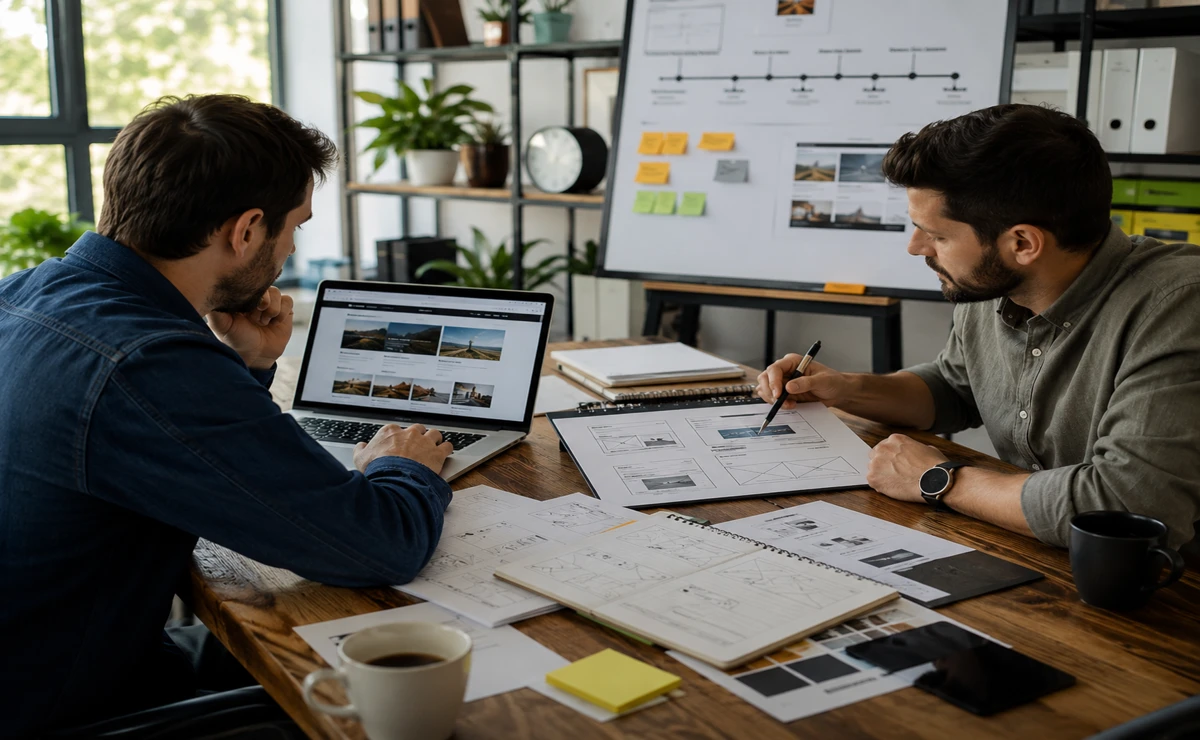
WordPress theme customisation modifies an existing theme’s appearance and functionality, while custom design builds an entirely new WordPress site from the ground up.
The differences are worth knowing before you commit:
- Theme Customisation vs Custom Build: Theme customisation tweaks an existing WordPress theme using built-in tools, CSS, or page builders. You’re working within a pre-built framework, which speeds things up but limits how far you can push the design.
- Starting from Scratch: Custom design builds a WordPress site with no pre-made template holding it back. A web developer writes the code from the ground up, which gives the final product a structure and capabilities that are entirely unique.
- The Core Trade-off: Speed and lower cost sit on one side, full creative and technical control on the other. Most businesses find the decision comes down to how much flexibility their project actually needs.
Theme customisation and custom development each have a genuine place in WordPress development. So, the right fit depends entirely on what your site needs to do.
What WordPress Theme Customisation Can (and Can’t) Do
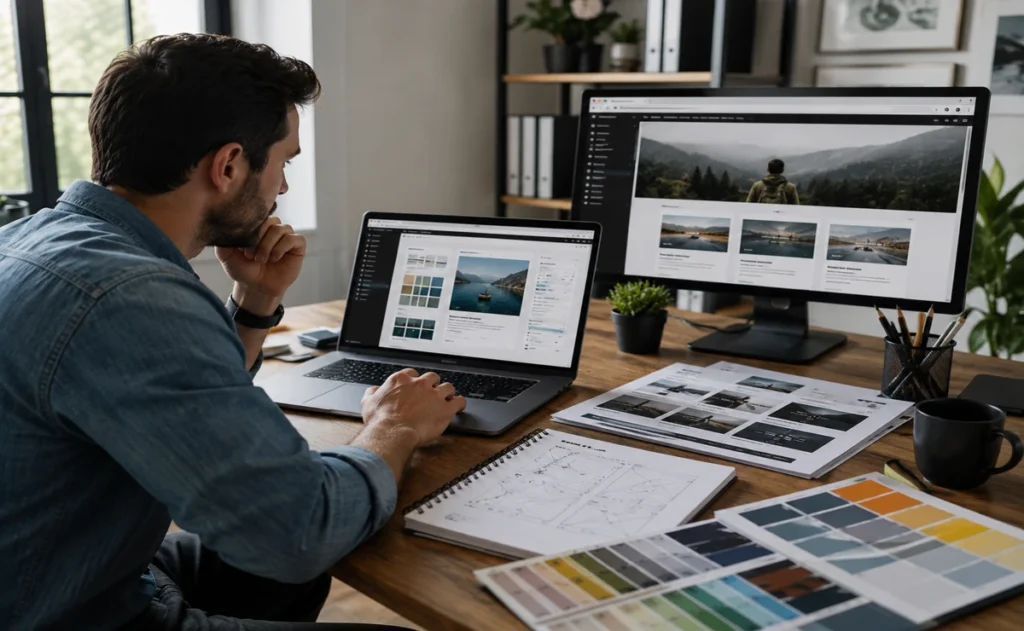
Most WordPress site owners assume theme customisation can handle anything, but there are real limits worth knowing before you commit.
Most themes let you adjust colours, fonts, and layouts without touching a single line of code. For simple WordPress sites, that’s plenty. Push beyond the default settings, though, and the gaps in what theme customisation can do will show up quickly.
Working with Additional CSS and Built-In Tools
The best part about additional CSS and built-in WordPress tools is that you can make meaningful visual changes without ever touching the core theme files.
Here’s what these built-in tools can do for your site:
- Additional CSS Overrides: Additional CSS lets you override default styles without editing core theme files directly. Small visual tweaks, like adjusting spacing, font sizes, or button colours, are easy to implement this way without breaking anything else on the page.
- Built-In Customiser Controls: The WordPress Customiser and block editor offer solid visual control for non-developers on most themes. You can update your home page layout, adjust the header, and preview changes in real time before anything goes live.
- Block Themes and Templates: Block themes take this further by letting you edit full site templates, including the footer and front page, directly inside the editor. Installing a new theme or swapping a template takes just a few minutes.
For straightforward branding updates, these built-in tools get the job done well. Once you need something more structural, though, you will likely need to go beyond what CSS alone can offer.
How Far Can a WordPress Theme Really Go?
Premium themes look polished out of the box, but they still operate within a fixed framework. Colours, layouts, and sections are adjustable, but restructuring navigation or adding custom post types will require a developer.
Page builders like Elementor extend your active theme’s reach, though the extra code they add can slow load times and push up bounce rates.
Once your business outgrows the original framework, no CSS tweak or plugin fix will solve it. That’s the point where custom WordPress development becomes the only logical next step.
Custom WordPress Development: When Businesses Need More
Custom WordPress development gives businesses something that theme customisation simply cannot deliver. It’s a site built entirely around their own requirements, with no compromises.
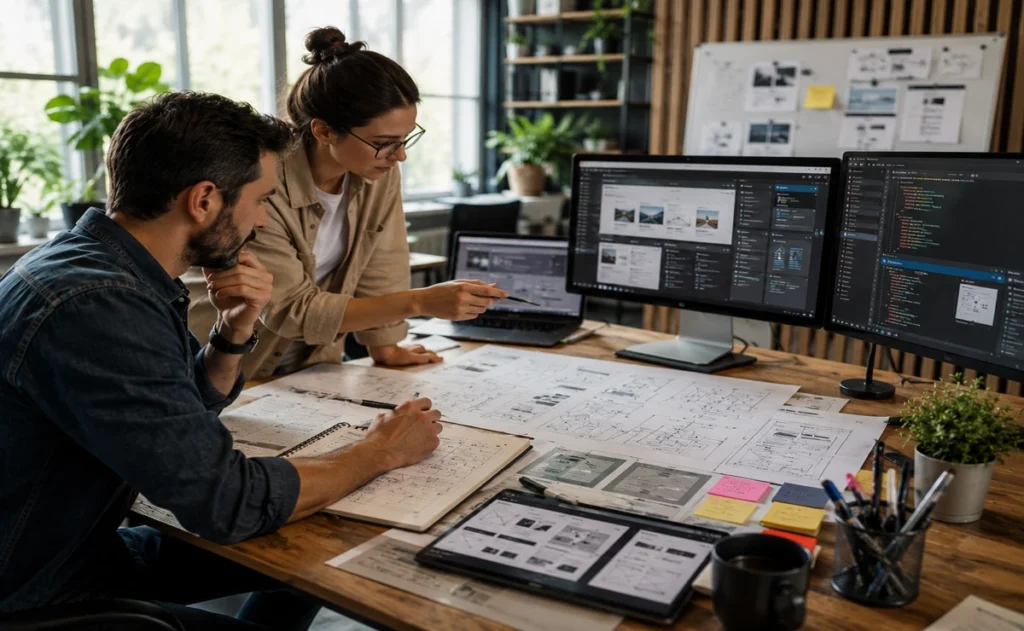
On top of that, WordPress developers build solutions tailored to specific workflows, integrations, and brand requirements. That means no leftover code from unused features, no design constraints from a pre-built framework, and no hard limits on what the final site can do.
Custom builds take longer and cost more upfront, but they deliver precise control over functionality, structure, and performance that growing businesses genuinely need. For companies with complex web design goals or specific e-commerce requirements, a custom approach is often the only viable solution.
What WordPress Developers Actually Build
Now that you know why businesses go custom, here’s what WordPress developers are actually putting together under the hood.
Take a look at what a custom build typically involves:
- Custom Post Types and Templates: Developers create custom post types, templates, and plugins built specifically for the client’s WordPress site. So every element serves a defined purpose. A real estate platform needs custom property listing templates and filtered search functionality, things no stock theme can deliver cleanly.
- No Code Bloat: Custom themes built by an experienced web developer carry no bloat from unused theme features or unnecessary plugins. That keeps the codebase clean, load times faster, and the site easier to maintain long-term.
- Complex Functionality Builds: Bespoke WordPress development supports demanding web design needs like membership systems, custom dashboards, and e-commerce platforms. Experienced developers scope these projects carefully, so the final product aligns tightly with the client’s business goals.
A custom WordPress build isn’t for every project, but for businesses with specific needs, it’s the most reliable path to a high-performance site.
HTML, CSS, and the REST API in Custom Web Design
Behind every high-performing custom WordPress site, there’s a specific set of tools doing the heavy lifting, and most people never see them.
Here’s what experienced developers actually work with:
- HTML, CSS, and PHP: Custom themes are built using HTML, CSS, and PHP to control every aspect of site output. Unlike theme customisation, developers edit PHP files directly, giving them full authority over how every page renders in the browser.
- The WordPress REST API: The WordPress REST API connects WordPress sites with external apps, third-party services, and custom front-end frameworks. A booking platform syncing live availability from an external database is a solid real-world example, and no standard plugin comes close to replicating that level of control.
- Full Development Control: These tools give experienced developers complete authority over performance, structure, and third-party integrations. A clean codebase built with proper HTML and CSS from the ground up will consistently outperform a heavily modified theme.
Get these tools right, and your WordPress site will outperform any heavily modified theme on speed, structure, and long-term reliability.
Cost, Speed, and Scalability: Picking What Fits Your WordPress Site
Budget and timeline will narrow your options quickly, but scalability is often the factor that makes the final call. Run through the key factors below before you decide:
| Factor | Theme Customisation | Custom Design |
|---|---|---|
| Cost | Lower upfront investment | Higher initial project cost |
| Speed | Faster to launch | Longer build time |
| Scalability | Limited long-term growth | Scales with business needs |
| Performance | Depends on plugins and page builder | Optimised from the ground up |
| Mobile Devices | Theme-dependent responsiveness | Built to spec for all devices |
Custom development costs more, but delivers a high-performance website. Google’s Web Performance Best Practices confirms that performance directly impacts your search rankings.
So, if a content delivery network integration is on your roadmap, a custom build is worth the investment.
Web Design Goals That Should Drive Your Decision

Getting clear on your web design goals before you choose a path will save you time, money, and a costly rebuild down the track.
For portfolios, local service pages, and small business sites, theme customisation is more than enough. Designers focused on the best website designs will find it launches faster, costs less, and still produces a polished result with the right CSS adjustments.
Businesses with complex customer journeys or e-commerce needs will quickly outgrow what any theme can deliver. In fact, according to Harvard Business School, your digital presence needs to reflect a brand identity that’s consistent, trustworthy, and entirely your own.
Hybrid Themes: A Middle Ground for WordPress Sites
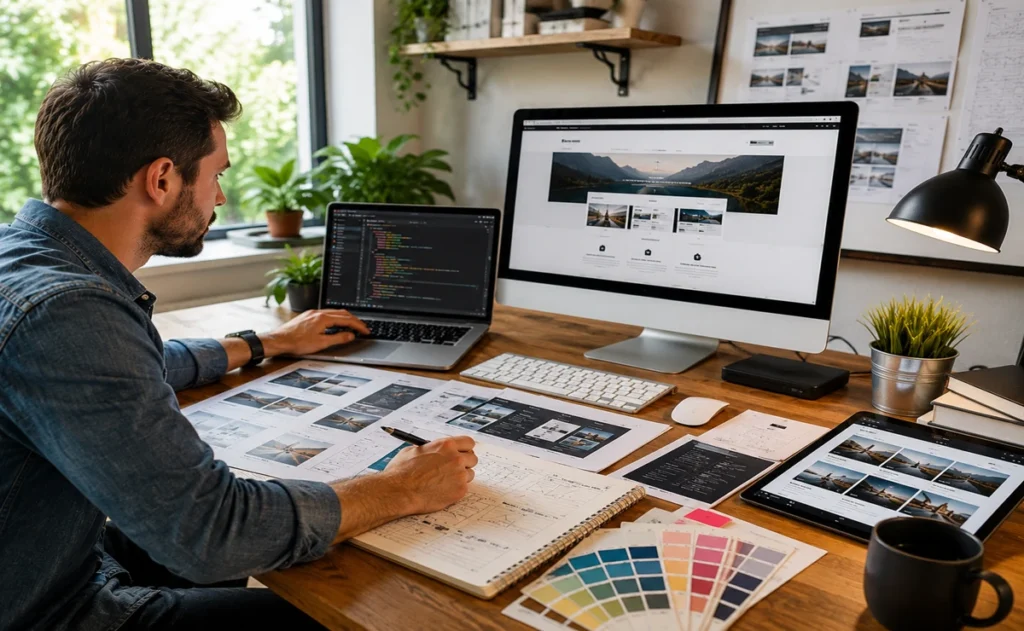
Hybrid themes give you more creative freedom than standard WordPress theme customisation, without the price tag of a full custom development project.
A hybrid approach combines a base WordPress theme with custom CSS, additional templates, and child theme modifications. You get a more distinctive result than a stock theme delivers, without paying for a full build.
Block themes work particularly well here, since their template system makes targeted customisation far more accessible than traditional theme setups. This path suits mid-range budgets needing a polished online presence with a manageable build time.
Custom WordPress development demands significant resources, and pure theme customisation has clear limits. Plus, hybrid development sits right between the two, offering a practical balance of cost, speed, and design quality.
Ready to Build the Right Way? Here’s Your Next Step
Speed and budget point toward theme customisation. Precise functionality and scalability point toward custom development. Hybrid themes sit comfortably in between, giving growing businesses a cost-effective way to develop a more polished online presence.
The best WordPress development path is always the one that aligns with your actual business goals, not just your current budget. Getting that decision right from the start saves your company from a costly rebuild later on.
Ready to move with your WordPress project? The team at DPR Conference works with clients across a range of web design and development services, from theme customisation through to fully custom WordPress builds.